
Grip Strength, VO2 Max, and Other Markers Worth Knowing
A friendly tour of the measurable fitness proxies linked with aging well — what they reflect, how they're tested, and how to nudge them upward.
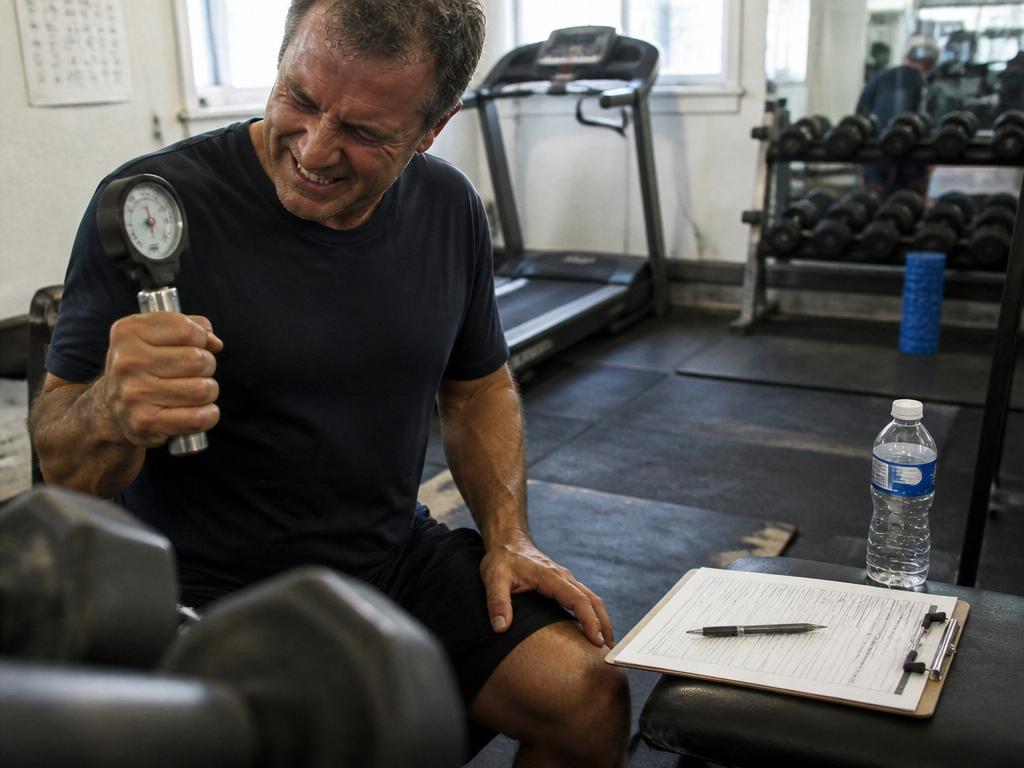
Some aspects of how well you’re aging can actually be measured — not with crystal balls, but with simple fitness markers that researchers keep linking to long-term health. Think of them as a friendly dashboard, not a verdict.
What each marker reflects
A handful of measurable markers show up repeatedly in the conversation about aging well. None of them is a perfect crystal ball, and each is just one proxy among many — but together they paint a useful picture of physical resilience.
- Cardiorespiratory fitness (often called VO2 max). This reflects how well your heart, lungs, and muscles deliver and use oxygen during hard effort — essentially your aerobic engine. Higher cardiorespiratory fitness is broadly associated with better health outcomes.
- Grip strength. Simple to measure and surprisingly informative, grip strength is often used as a convenient stand-in for overall muscular strength, which tracks with physical capability.
- Leg and lower-body strength. The power to rise from a chair, climb stairs, and stay steady is closely tied to independence as you age.
- Balance and stability. The ability to stay upright and recover from a wobble matters enormously for avoiding falls later in life.
- Mobility and flexibility. How freely your joints move shapes how easily you handle daily tasks.
The important framing: these are associations, not guarantees. A given number doesn’t decide your fate. But as a snapshot of how robust your body is right now, and as something you can work to improve, they’re genuinely worth knowing.
How they’re commonly tested
You don’t need a high-tech lab to get a rough read on most of these. Many can be approximated with simple, low-tech checks, while a few have more precise versions available through professionals.
| Marker | A simple way it’s gauged |
|---|---|
| Cardiorespiratory fitness | How you handle brisk walking, stairs, or a paced effort; precise testing exists in clinical and athletic settings |
| Grip strength | A handgrip device, or simply noticing your ability with everyday gripping tasks |
| Lower-body strength | Sit-to-stand style movements — how easily you rise from a chair |
| Balance | Standing on one leg, or other simple steadiness checks |
| Mobility | Reaching, squatting, and moving through a full range without strain |
A few honest notes on testing. Precise measures — like a formal cardiorespiratory fitness assessment — are typically done with professional equipment and supervision, which is the safest route if you want real numbers. The simple at-home versions are useful for tracking your own trend over time, but they’re approximations, not diagnoses. And before attempting any maximal-effort test, especially if you have health concerns or haven’t exercised in a while, it’s smart to talk with a clinician first.
The real value isn’t a single reading. It’s watching your own trend: are these markers holding steady or improving as you put in consistent work?
Improving them over time
Here’s the motivating part: nearly all of these markers respond to training. They’re not fixed traits you’re stuck with — they’re capacities you can build, often at any age, with the right consistent habits.
What tends to move each one:
- Cardiorespiratory fitness improves with regular aerobic activity, including a mix of easy-effort endurance work and occasional harder efforts.
- Grip and overall strength respond to resistance training — challenging your muscles and progressing gradually.
- Lower-body strength builds through squatting, climbing, carrying, and similar loaded movements.
- Balance sharpens with practice: standing on one leg, varied footwork, and activities that challenge stability.
- Mobility is maintained by moving your joints through their full range regularly.
The beautiful thing is how much these reinforce one another. A consistent routine that blends aerobic work, strength training, and a little balance and mobility practice tends to nudge the whole dashboard in the right direction at once. You don’t need separate programs for each marker — a well-rounded, sustainable habit covers most of the bases.
A grounded mindset helps here, too. The point isn’t to chase a perfect score or to panic over a single test. It’s to use these markers as motivating feedback — confirmation that consistent effort is paying off — while keeping in mind they’re one piece of a much larger health picture.
The bottom line
Grip strength, cardiorespiratory fitness, lower-body power, balance, and mobility offer a friendly, measurable window into how well your body is holding up — and, better still, they tend to improve when you train them. Treat them as a dashboard for motivation rather than a fortune-teller, track your own trend over time, and lean on professionals for precise testing and any maximal efforts. The most encouraging takeaway is that these aren’t fixed — consistent, well-rounded activity can move them, often at any age.


